ULTHEALTH
Every confirmed attack is closed and wired into the regression suite.
An AI health application tested for what it could be made to do, with each confirmed attack closed and held closed by a regression test.
Read the case study →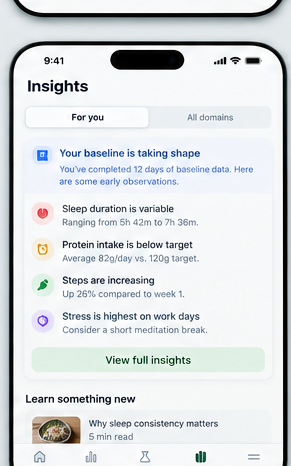
Security & Assurance/AI Red Teaming
We attack your AI the way a real user would, find how it can be manipulated, leak sensitive information or misuse connected tools, and show what needs to be fixed before launch.
Agile Labs tests how the AI agent responds to malicious prompts, untrusted content and attempts to bypass its controls. We test whether an attacker can access sensitive information, misuse connected tools or make the agent take actions it should not.
Confirmed vulnerabilities are documented with reproducible attacks, fixes and tests that can be run again after remediation.
ULTHEALTH
An AI health application tested for what it could be made to do, with each confirmed attack closed and held closed by a regression test.
Read the case study →We model where the system is exposed, then attack it the way a real attacker would, and report only what we can make happen twice.
An assistant is exposed when it combines access to private data, untrusted content and a way to send information out. Any two may be safe. All three together give a hostile instruction a path through the system.
Prompt injection does not have to come from a user. It can sit inside a PDF, email, ticket, webpage or calendar invitation the AI later reads.
We test for tool abuse, data exfiltration and privilege escalation.
A confirmed finding carries the attack, the transcript, a severity, how often it worked and the fix. Findings are mapped to the OWASP Top 10 for LLM Applications and MITRE ATLAS so the attack class is clear.
From defining what we can attack to verifying the fixes.
Agree in writing which systems we can test, what we can attempt and where testing must stop.
Establish what data, tools and systems the AI can access, and which actions it can take.
Use automated attacks first, then test by hand for prompt injection, data exposure, tool abuse and other weaknesses.
Report only confirmed vulnerabilities, with the attack, evidence, severity, repeatability and required fix.
Re-run confirmed attacks after remediation and turn them into regression tests for future releases.
What organisations need to know about testing AI systems against attack.
Twelve published prompt-injection and jailbreak defences were bypassed by adaptive attacks in a single frontier-lab study, most above ninety per cent. A filter has a false-negative rate, so a share of attacks pass through it.
Read more →Instructions planted in a document the system will later retrieve. The user asks an ordinary question and the planted text runs, which is why the guardrail never fires.
Read more →Published detector accuracy runs from about sixty per cent to the high nineties depending entirely on the corpus tested, which is why the number that matters is measured on the client’s own traffic.
Read more →Find out what your AI can be made to do before someone else does.