PAVURE
Findings turned into controls, verified against the original tests.
Findings from an Enterprise Readiness Assessment turned into controls in the product: gateway, permissions, agent limits and logging, then re-tested.
Read the Pavure story →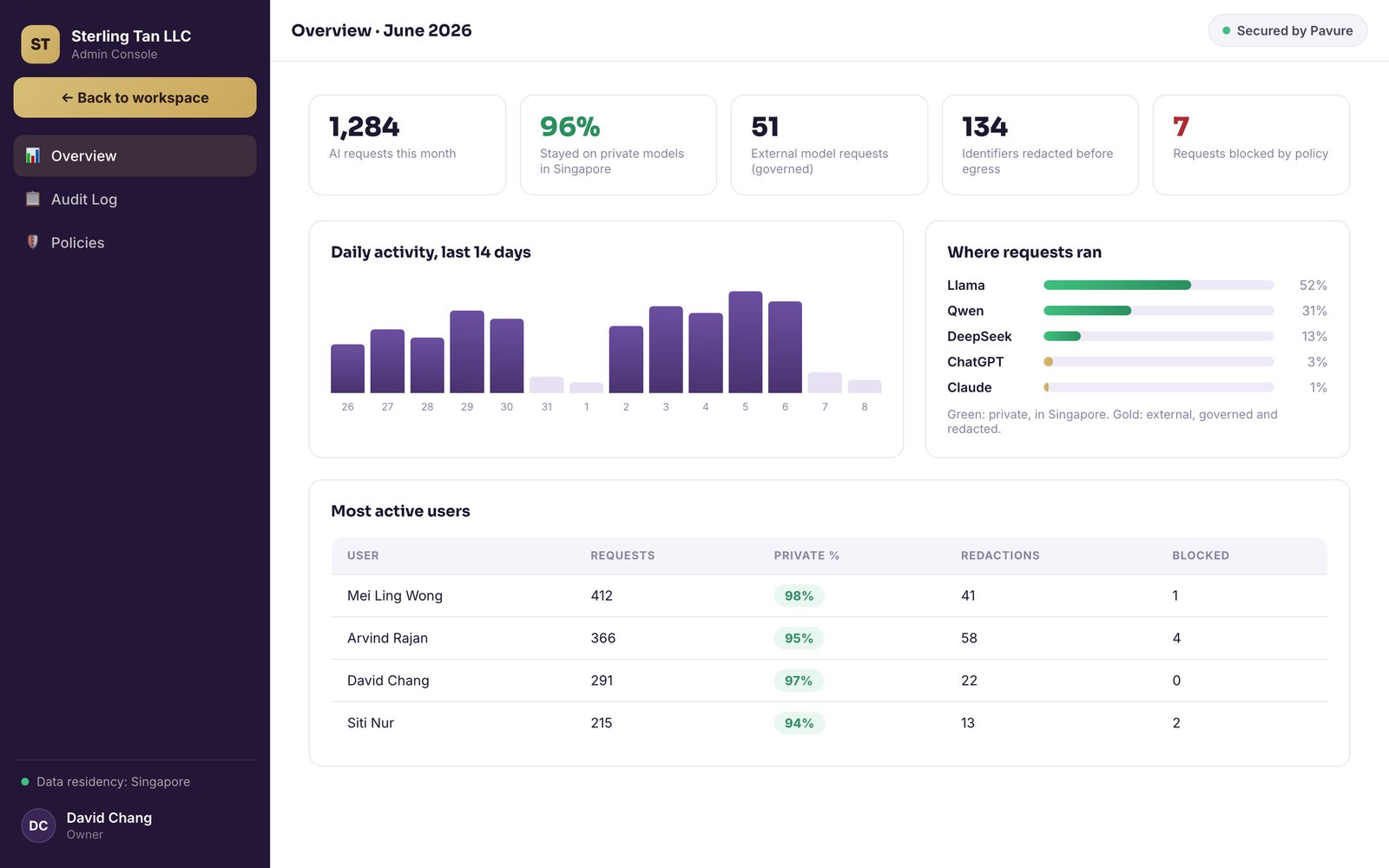
Security & Assurance/Secure AI Engineering
Secure AI Engineering turns findings from an AI security assessment, audit or customer security review into controls. Agile Labs deploys and configures AI gateways, guardrails, permissions, logging and agent controls in the organisation’s own environment and tests them against the original findings.
Agile Labs takes the findings from your AI security assessment, audit or review and builds the controls needed to fix them. We implement gateways, guardrails, permissions, agent restrictions and logging directly in your environment.
We then re-run the original tests to verify the findings are closed.
PAVURE
Findings from an Enterprise Readiness Assessment turned into controls in the product: gateway, permissions, agent limits and logging, then re-tested.
Read the Pavure story →We use established security tools and configure them around the organisation’s AI systems, data and access requirements.
Route model calls through one gateway to control who can use which models, how much they can spend and what activity is recorded.
Separate untrusted content, private data and outbound access so one compromised component cannot expose everything the AI can reach.
Give agents and tools only the access their work requires, with human approval before consequential actions.
Keep evidence of what was allowed, blocked or changed so the organisation can verify that its AI security controls are working.
From identified findings to tested controls running in the organisation’s environment.
Separate what must be addressed before launch from what can follow.
Route model access through one gateway with identity, logging, budgets and security controls.
Remove access the AI does not need and identify wider permission issues that require separate remediation.
Give agents and tools only the permissions they need, with human approval for consequential actions.
Re-run the original tests and hand over the configuration, the code and the operating runbook.
What organisations need to know about turning findings into controls that run.
It does not leak. It faithfully returns what the asking person could already open, which after a decade of sharing is usually more than anyone measured. Permissions are fixed before it goes live.
Read more →One place to apply identity, budgets, rate limits and an approved model list, and one record of what was asked and answered. Without it there is nothing to log, nothing to bill back and nothing to switch off.
Read more →A typical enterprise tenant carries 150 to 300 overshared sites before any AI is switched on, and the sprawl returns within about six months unless a standing routine keeps it corrected.
Read more →Turn AI security findings into controls that actually stop the attack.